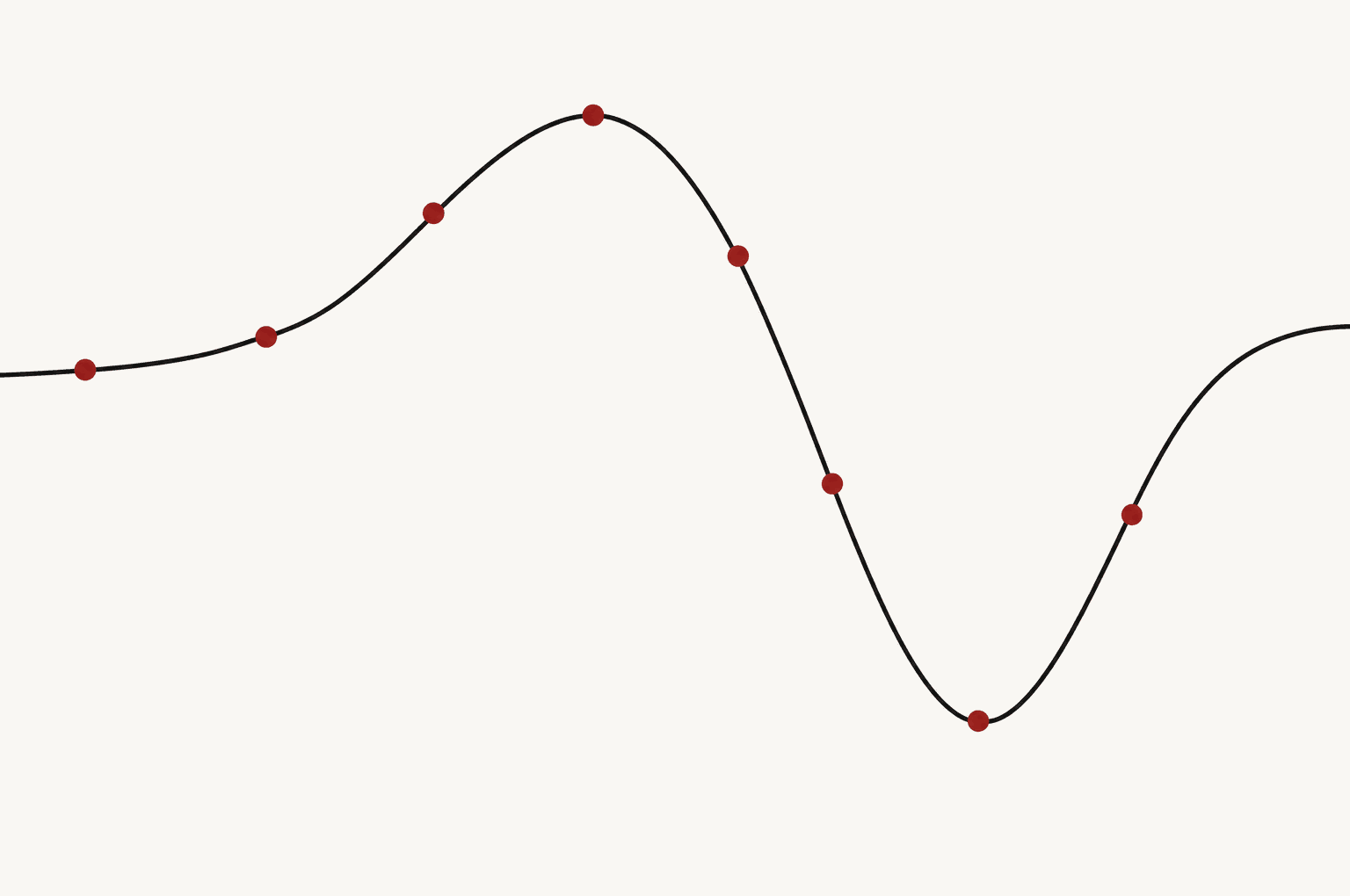
The eight twin flame stages used in this guide are yearning, awakening, testing, honeymoon, crisis, runner and chaser, surrender, and reunion. They describe a spiritual interpretation of a relationship, not a validated sequence or a promise that separation will end in reunion. Different accounts use different names and orders.
A note on the model itself
Stage models are useful for orientation but treacherous as predictions. The actual progression of any given relationship rarely moves through stages cleanly. People skip stages, repeat stages, or live in two stages simultaneously. The stages are best understood as patterns that may or may not apply to a given connection, not as a checklist your relationship must pass.
If you are looking for help with a breakup, go to the twin flame separation guide. For recurring pursuit and withdrawal, read about the runner and chaser dynamic. This page explains the overall stage model.
Stage 1: The Yearning
Pre-meeting. Indefinite duration.
The yearning is a phase of formless longing that, in the framework, precedes the meeting. There is a sense that someone is missing — not nostalgically, but presently, as though a person you cannot name is currently absent from your life. Dreams of a faceless lover are commonly reported. Old relationships lose their pull. Career trajectories destabilise. The framework calls this the soul’s preparation for the meeting; readers often describe it as feeling “ready for something I don’t know how to name.”
Clinically, the same description fits a period of emerging readiness for relational change — frequently triggered by therapy, life transitions, the resolution of a long pattern, or simply maturation. There is good evidence that adult attachment style can shift toward security through internal work, and that period often presents as a felt orientation toward something different than the relationships one has had.
The framework gets the felt sense of imminence right. The clinical view gets the mechanism right. Both are useful.
Stage 2: The Awakening
The meeting. Brief — typically days to weeks.
The encounter. The framework describes it as recognition rather than introduction — a felt sense of having known the person before, sometimes accompanied by chest sensations or time distortion. Our dedicated guide explores the reported signs and interpretations of twin flame awakening.
The recognition stage is a spiritual description, not a measured neurological state. A feeling of familiarity or attraction cannot tell you someone’s character or establish a shared soul. Specific claims about dopamine, oxytocin, or brain circuitry would require evidence the framework does not provide.
Within the framework, recognition may be interpreted as spiritual. That is a belief, not a conclusion that can be distinguished from attraction or familiarity by the intensity of a feeling.
Stage 3: The Testing
Weeks to months. The honeymoon’s prelude.
The framework names the third stage testing: the connection begins surfacing each partner’s unhealed material, often with surgical precision. The relationship feels intense and disorienting. Both partners encounter parts of themselves they hadn’t seen, often through the other’s presence as a mirror.
Jung’s shadow work is the closest psychological analogue. The lover can act as a screen onto which we project rejected aspects of ourselves; their actual presence may then force a confrontation with what we have hidden. This is not specific to twin flames. From an attachment perspective, unusually precise triggers can also emerge when two established patterns interlock.
Stage 4: The Honeymoon
Weeks to months. Often the most beautiful and most misleading stage.
After the testing phase’s acute disclosure, the connection often enters a honeymoon — a period of unusual harmony, creative output, sexual intensity, and a sense of merged identity. The framework reads it as a glimpse of union, a preview of what the relationship can be once both partners do the work.
A period of closeness can feel reassuring. It does not show that every difficulty has been resolved, nor does it establish that a crisis must follow. The stage sequence is not a clinical model or a forecast.
Many readers, looking back from later stages, identify the honeymoon as the moment they decided this was their twin flame. The decision was usually premature.
Stage 5: The Crisis
The Tower falls. Sudden — hours to days. The pivot.
The crisis is the moment the testing material returns under intolerable pressure. An argument escalates into a structural fight. A boundary fails. A trigger fires that neither partner is equipped for. The honeymoon’s sense of merged identity collapses into the older, sharper truth: two people with old wounds whose nervous systems are firing at each other.
Tarot calls this The Tower; the framework borrows the imagery. Clinically, this is the failure of the temporary regulatory equilibrium the honeymoon established. The attachment systems reactivate. The avoidant partner’s engulfment fear and the anxious partner’s abandonment fear both flare, often within the same conversation.
Most readers who arrive at our publication arrive somewhere in or just after the crisis stage. The relationship has become legible as a pattern they cannot make sense of on their own.
“Most readers who arrive at our publication arrive somewhere in or just after the crisis stage. The relationship has become legible as a pattern they cannot make sense of on their own.”
Stage 6: The Runner / Chaser Dynamic
Months to years. Often the longest stage. The most documented.
After the crisis, one partner withdraws; the other pursues. The framework names them runner and chaser. The runner experiences the connection’s intensity as overwhelming and seeks distance. The chaser experiences the withdrawal as devastation and pursues. This push-pull pattern often unfolds during twin flame separation; our dedicated runner-chaser guide examines both roles in depth.
This stage is where the framework and the clinical view align most cleanly. The runner-chaser dynamic is, structurally, anxious-avoidant attachment activation. The framework assigns spiritual meaning to the dynamic — both partners are working through their fear of true union — but the mechanism is identical to what attachment theory describes.
Practical observation: this is the stage at which the largest amount of harmful advice gets given. Twin flame coaches frequently advise the chaser to “surrender,” the runner to “return when ready,” and both to ignore therapy or counselling on the grounds that ordinary clinical work doesn’t apply to twin flame dynamics. This advice tends to entrench the dynamic rather than resolve it. We recommend, plainly, that any reader in stage six work with a therapist experienced in attachment patterns.
Stage 7: The Surrender
The shift. Internal. Often felt as a release.
Stage seven is the chaser’s shift. Surrender, in the framework’s correct sense, is not surrender to the other person or to the timing of the universe. It is surrender of the chase itself — recognition that pursuit is the engine of the dynamic and that pursuit cannot end the dynamic.
From an attachment perspective, this can involve addressing the fear that drives pursuit, sometimes with professional support. Ending the chase can return attention to the rest of the chaser’s life, energy, and choices.
The framework predicts that surrender may catalyse the runner’s return, but stopping pursuit cannot predict renewed contact. It can reduce pressure in the cycle and return attention to the chaser’s own life. That recovery has value whether or not the other person responds.
Stage 8: The Reunion
The framework’s endpoint. Permanent, in principle. Real, in practice, only sometimes.
Twin flame reunionis the framework’s hoped-for stage — the partners come back together as two individuals capable of a healthier partnership. The drama of the earlier stages is said to give way to a quieter, more sustained connection.
In attachment terms, this would correspond to a relationship where both partners can communicate, repair conflict, respect boundaries, and sustain mutual choice. There is no reliable prevalence or timeline for this stage.
The framework holds that reunion is the intended ending, but no dataset can tell an individual reader whether reconnection will occur. Some people instead find that ending the chase and recovering a stable sense of self is the completion that matters. Neither a stage label nor a sign can replace consent and observable change.
The framework view and the clinical view, side by side
| Spiritual framework | Clinical equivalent | |
|---|---|---|
| 1. Yearning | Pre-meeting soul preparation | Emerging relational readiness |
| 2. Awakening | Soul recognition | Intense attraction + familiarity activation |
| 3. Testing | Mirror surfaces unhealed material | Shadow projection / attachment activation |
| 4. Honeymoon | Glimpse of union | Temporary attachment equilibrium |
| 5. Crisis | The Tower falls | Failure of temporary regulation |
| 6. Runner / Chaser | Externalised internal split | Anxious-avoidant cycle |
| 7. Surrender | Release of attachment to outcome | Chaser’s own attachment work |
| 8. Reunion | Whole-soul integration | Earned secure attachment, sometimes |
Twin flame phases or twin flame stages: the same map
Some writers describe the journey as twin flame phasesrather than stages, and the counts vary — five-phase, seven-phase, and eight-stage versions all circulate. The differences are editorial, not substantive: every version traces the same arc from recognition through crisis and separation toward some form of resolution, and every version places the runner-chaser dynamic near the middle. If you have read a phase model elsewhere, the eight stages above are the same territory at a finer grain. What matters is not which count you adopt but what the middle of the map does — it is where the framework reading and the clinical reading diverge most, and where the table above is worth a second look.
Where readers usually are when they find this article
Readers often seek stage guides after a crisis or during runner-chaser separation, when the framework alone no longer feels sufficient. If that is where you are, three things may help.
- Use a reflection tool. Our False Twin Flame Quiz compares the pattern you describe with several possible interpretations. It cannot diagnose or definitively classify a relationship.
- Read the false twin flame pillar. Our long-form pillar is the diagnostic counterpart to this stages article. Read together, they tell you what kind of journey you are on and where in it you are.
- Consider whether the surrender stage is yours.If you are the chaser, the most valuable single move is the inner work that ends the chase regardless of the other person’s response. This is true whether the connection turns out to be a twin flame or not.
The eight stages and what they actually offer
Our position on the framework, after considering it from both vantages, is this: the stages are a useful map. The metaphysics is what it is. Whatever you believe about souls, the eight-stage progression names a real pattern that real relationships move through, and naming it accurately helps readers locate themselves.
It does not, on its own, tell you what to do. The stages are descriptive, not prescriptive. The decisions — to stay, to leave, to wait, to surrender, to do the inner work, to stop — are yours, regardless of which stage you are in. The framework can orient you. It cannot decide for you.
That, perhaps more than anything, is the point. The eight stages are not a path you must walk to a predetermined end. They are a description of a pattern you can recognise, work with, and where appropriate, walk out of. The recognition is the gift. What you do with it is yours.